
A dental implant is designed to stay put. It acts like a small anchor in the jawbone, supporting a crown or other restoration through everyday chewing and speaking.
But the mouth is not static. Bone can change, gums can recede, bites can shift, and sometimes an implant that once worked well no longer fits the health of the area around it.
So, can dental implants be removed? Yes, in many cases they can. Removal is not routine, but it may be the right step when an implant has failed, become infected, fractured, or ended up in a position that no longer works.
That matters because implants are meant to fuse with bone through osseointegration. Once that bond forms, removal is more involved than removing a natural tooth, but it can often be done safely with the right planning.
At Maison LA Boutique Dentistry in Los Angeles, CA, our dental implants team focuses on thoughtful implant care and replacement options.
Most implants are placed with the goal of long-term success. When one needs to be removed, there is usually a clear reason.
One common reason is implant failure. This can happen early if the implant never fully integrates with bone, or later if it loses support over time.
Another reason is peri-implantitis. This is an inflammatory disease around an implant that can lead to bone loss if it is not controlled.
Sometimes the implant itself is stable, but the position is a problem. If it was placed at a poor angle or in a spot that makes the final tooth hard to clean, uncomfortable to bite on, or unattractive, removal may be considered.
Fracture is less common, but it does happen. The implant, abutment, or restoration can break under heavy bite forces or long-term strain.
Pain, persistent infection, nerve-related symptoms, or sinus issues may also lead to removal. In those cases, the dentist has to confirm whether the implant is truly the source of the problem.
Not every implant problem means the entire implant must come out. In some cases, only the crown or abutment needs to be removed or replaced.
The visible tooth-like part is the restoration. Under that is the abutment, and below that is the implant fixture embedded in the bone.
If the problem is limited to the crown or abutment, the fixture may be left in place. If the fixture is loose, infected, fractured, badly positioned, or surrounded by major bone loss, then removal may be necessary.
A proper exam often includes dental X-rays and sometimes a 3D cone beam scan. This helps show bone support, nearby nerves, sinus anatomy, and how difficult removal may be.
That distinction is important. Patients often hear that an implant has a problem and assume the whole system has failed, but that is not always the case.
Implant removal is usually a controlled surgical procedure. The method depends on how firmly the implant is attached, how much bone surrounds it, and whether the goal is to preserve the site for future treatment.
If the implant is already loose, removal may be fairly straightforward. That often happens when there has been failed integration or significant bone loss.
A well-integrated implant is different. The dentist or specialist may use a specialized removal tool that applies reverse torque to try to unscrew the implant from the bone with as little trauma as possible. For clearly surgical cases, your dentist may discuss more about the process of implant removal with you.
If reverse torque is not enough, a more surgical approach may be needed. That can involve carefully removing a small amount of surrounding bone to free the implant while preserving as much healthy structure as possible.
The goal is not just to remove the implant. The goal is to protect the site, reduce trauma, and keep future treatment options open.
Some sites can be grafted during the same visit. Bone grafting helps rebuild lost bone volume and may improve support for a future implant.
The experience depends on the case. A loose implant may be simpler to remove than many patients expect, while a deeply integrated implant can feel more like minor oral surgery.
Local anesthetic is typically used to numb the area. If the procedure is more complex or you feel anxious, your dentist may also discuss sedation options.
After removal, some soreness, swelling, and tenderness are normal for a few days. Recovery depends on how much tissue was involved and whether grafting was done.
Soft tissue may settle within a few weeks. Bone healing usually takes longer, especially if the area needs to be rebuilt before another implant can be placed.
Call the office promptly if you have persistent bleeding, worsening swelling, fever, drainage with a bad taste, numbness, or severe pain. These are urgent red flags that may point to infection, nerve involvement, or another complication.
Often, yes. But the answer depends on why the first implant failed and what the site looks like after removal.
If the implant fails early and the bone is still healthy, a new implant may sometimes be placed after healing or, in selected cases, at the same visit. Immediate replacement depends on careful case selection.
If there is infection, significant bone loss, or poor implant position, treatment is usually staged more carefully. That may include healing time, gum treatment, bite adjustment, or grafting before a new dental implants plan is started.
It is also worth asking whether another implant is the best next step at all. Depending on the location, bone quality, medical history, and bite forces, a bridge or removable option may make more sense.
The right plan should be individualized. General information is helpful, but the final decision depends on your anatomy and the reason the original implant needs to come out.
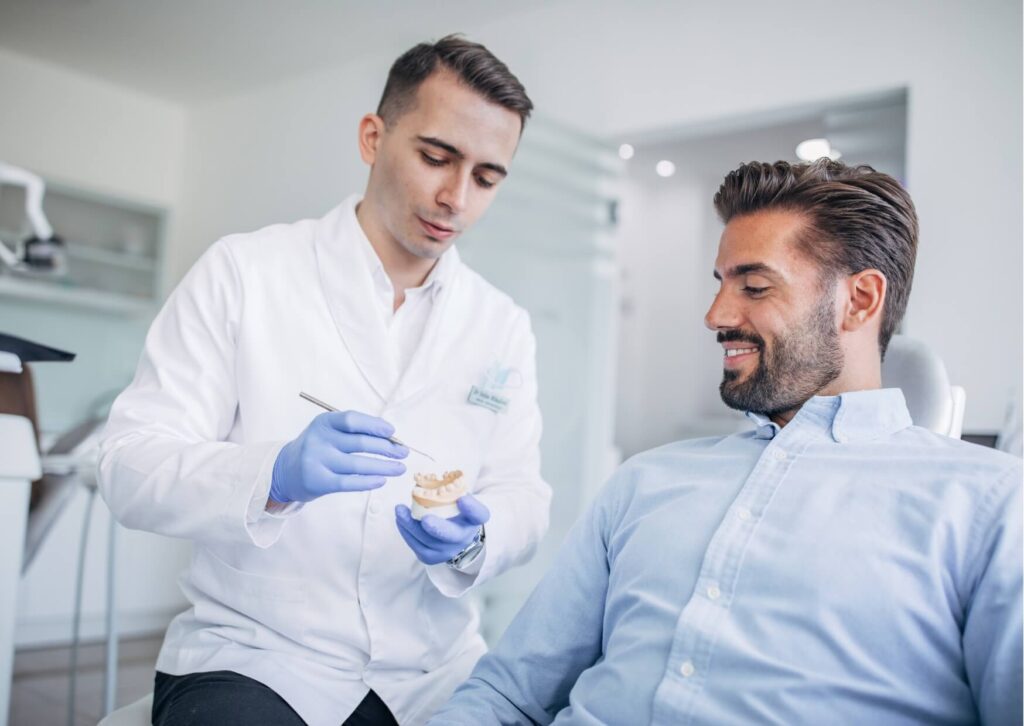
Removal is more likely when the implant is mobile, fractured, severely infected, or causing ongoing symptoms that cannot be managed conservatively. It may also be recommended when bone loss is advanced enough that the implant no longer has predictable support.
A poorly positioned implant may also need removal if it affects speech, cleaning, appearance, or the bite. This is especially important in the front of the mouth, where even a small positioning error can create major cosmetic and functional problems.
There is also a quieter kind of failure. Sometimes an implant is still present but no longer helpful because it keeps compromising comfort, hygiene, or the next restoration.
In those cases, honesty matters. Keeping a problematic implant simply because it is there is not always the most conservative choice.
A good consultation should leave you with clear answers. If implant removal is being discussed, it helps to ask direct questions.
You may want to ask:
These questions do not replace professional advice, but they make the discussion more grounded. A careful dentist should be able to explain not only what is planned, but why.
Maison LA Boutique Dentistry provides dental implants and implant planning for patients in Los Angeles, CA and nearby areas. Call (323) 660-5522 to Schedule implant consult.
In many cases, yes, but the difficulty varies. A loose implant is often easier to remove than one that is still tightly fused to bone.
It can affect the surrounding bone, especially if the implant is well integrated or there has already been bone loss from infection. Dentists usually plan removal in a way that preserves bone as much as possible, and grafting may be recommended when needed.
The procedure is typically done with local anesthesia, so the area is numbed during treatment. Some soreness and swelling afterward are common, but severe or worsening symptoms should be reported.
Sometimes, but not always. Immediate replacement depends on bone quality, infection status, implant position, and how much damage is present at the site.
General dentists with implant training may perform removal in some cases. More complex cases are often managed by an oral surgeon or periodontist, which is a gum and implant specialist.

| Monday | 9:00 AM – 5:00 PM |
| Tuesday | 9:00 AM – 5:00 PM |
| Wednesday | 10:00 AM – 7:00 PM |
| Thursday | 9:00 AM – 5:00 PM |
| Friday | 9:00 AM – 4:00 PM |
| Saturday | 9:00 AM – 2:00 PM |
| Sunday | Closed |