
Most full and partial dentures last about 5 to 10 years, but many need adjustments or relines sooner. Even when a denture still looks intact, normal wear and ongoing changes in the gums and jawbone can affect how it fits, feels, and functions.
If your denture feels loose, uncomfortable, or overdue for evaluation, a denture and partial assessment can clarify whether a reline, repair, or replacement is the best next step. Maison LA Boutique Dentistry in Los Angeles, CA can review fit and function to restore comfortable chewing and appearance.
How long dentures last depends on the design, materials, bite forces, daily care, and how much your mouth changes over time. These timelines are general estimates, not exact replacement deadlines.
|
Denture Type |
Typical Longevity |
Important Limitation |
|---|---|---|
|
Conventional full denture |
About 5 to 10 years |
Fit often loosens as the jawbone changes |
|
Removable partial denture |
About 5 to 10 years |
Supporting teeth and clasps need regular monitoring |
|
Immediate denture |
Often adjusted or replaced within months |
Healing changes the gums and bone quickly |
|
Implant-supported removable denture |
Often 5 to 10 years for the denture |
Attachments may wear sooner and implants need ongoing care |
Immediate dentures are placed soon after teeth are removed. They help preserve appearance during healing, but fit changes are expected as swelling goes down and the extraction sites remodel.
Implants can improve stability and chewing strength. Options such as implant dentures use implants to hold a prosthesis more securely, while dental implants can support more fixed or removable designs.
Even with implants, the denture teeth, acrylic base, clips, and attachment parts can still wear out. That means the prosthesis may still need maintenance, relining, or replacement over time.
Dentures wear down with daily use, but the bigger issue is often what happens underneath them. After tooth loss, the jawbone gradually shrinks because it no longer receives the same stimulation from natural tooth roots, a process often described as bone resorption.
As the bone and gums change shape, a denture can become loose even if it is not cracked or broken. That can affect chewing, speech, comfort, facial support, and the way the upper and lower teeth meet.
Artificial teeth also flatten and wear over time. When the bite becomes uneven, the denture may shift more easily and place extra strain on the jaw muscles.
Heat, abrasive cleaners, accidental drops, grinding, and home repairs can shorten a denture's lifespan. A changing mouth is often the main reason dentures need replacement, even when the appliance still looks usable.
If bone loss is significant, treatment such as bone grafting may help rebuild support for future implants or other prosthetic options. That is not necessary for every patient, but it can matter when long-term stability is a concern.
A dentist looks at the denture, oral tissues, bite, and any remaining teeth or implants before recommending next steps. In some cases, a simple adjustment is enough, while other cases call for a reline, repair, or full replacement.
A small amount of adhesive may help a denture feel more secure temporarily. Needing more and more adhesive, however, should not replace a proper exam.
|
Option |
Best Suited For |
Main Limit |
|---|---|---|
|
Adjustment |
A pressure spot or minor bite issue |
Does not fix broad loss of fit |
|
Reline |
A generally sound denture with a loose tissue surface |
Does not restore badly worn teeth or a poor bite |
|
Repair |
A crack, fracture, or detached tooth when the denture is otherwise serviceable |
Repeated breaks may point to a fit or bite problem |
|
Replacement |
Major fit changes, worn teeth, extensive damage, or an outdated design |
Requires new records, fittings, and an adjustment period |
A reline reshapes the underside of the denture so it fits the gums more closely. It can extend the life of a denture, but it will not correct severe wear, repeated breakage, or major bite problems.
Replacement is usually the better choice when the denture is unstable, heavily worn, repeatedly repaired, or no longer supports comfortable chewing. A new denture may also improve appearance if the old one has lost facial support or the teeth look worn down.
Never use household glue or boiling water to fix a denture at home. Those methods can damage the material, irritate oral tissues, and make professional repair harder.
Schedule an evaluation if your dentures click, rock, slip when you talk, or need more adhesive than they used to. Other common signs include sore spots, trouble chewing, speech changes, cracks, sharp edges, worn teeth, or a bite that no longer feels balanced.
Changes in facial support can also be a clue. If your dentures no longer support your lips and cheeks the way they once did, replacement may be worth discussing.
Redness, swelling, bleeding, burning, ulcers, or white or red patches under a denture should also be checked. If the denture is causing significant injury, remove it and seek prompt care for severe pain, rapidly increasing swelling, fever, pus, uncontrolled bleeding, trouble swallowing, or difficulty breathing.
Not every sore area is caused by the denture itself. Dry mouth, infection, cleanser reactions, and unrelated oral conditions can create similar symptoms and may need different treatment.
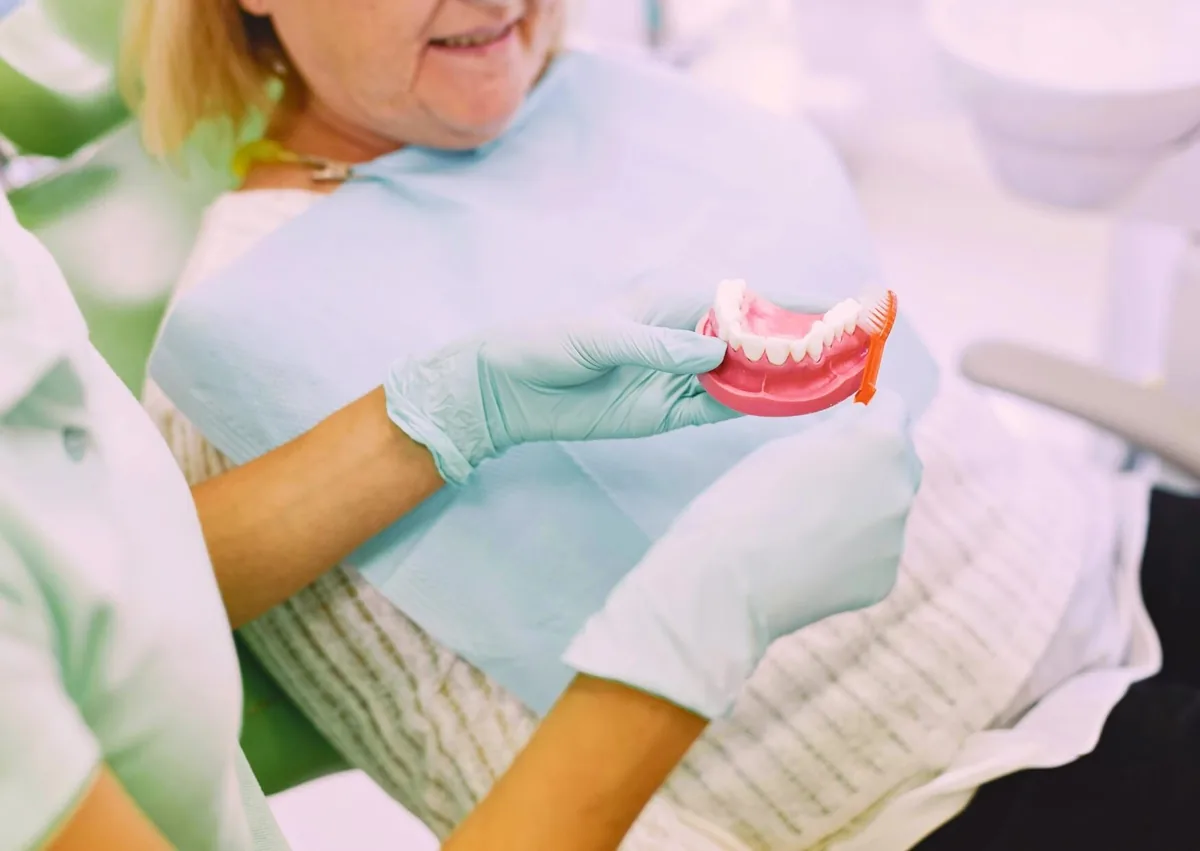
Good daily care helps dentures last longer and reduces odor, plaque buildup, and irritation. It does not stop natural bone and gum changes, but it can help protect the denture materials.
Clean dentures with a soft denture brush and a cleanser made for that material. Follow your dentist's instructions and the product directions, since some cleaners are too harsh for certain appliances.
Rinse the denture over a folded towel or a sink filled with water in case it slips. Avoid hot water and abrasive toothpaste, which can warp or scratch some dentures.
Unless your dentist tells you otherwise, remove dentures while sleeping so the tissues can rest. Clean the gums, tongue, palate, remaining teeth, and any implant parts every day, and store removable dentures as directed so they do not dry out.
Replacing dentures usually starts with an exam, measurements or digital scans, and bite records. Your dentist may also recommend X-rays or other imaging based on your oral health and whether teeth or implants are involved.
Most patients need one or more try-in visits before the final denture is delivered. These appointments help refine the fit, bite, tooth position, and overall appearance.
A new denture can feel bulky or unfamiliar at first, especially if your old one was loose. Short practice periods, softer foods, and follow-up adjustments usually make the transition easier.
Some pressure spots are common during the adjustment phase. Ongoing pain, instability, or difficulty chewing is not something you should simply live with.
Implant-supported options usually take longer when implants are not already in place. In those cases, treatment may include surgery and healing time before the final prosthesis is completed.
A consultation makes sense if your dentures are uncomfortable, unstable, damaged, cosmetically worn, or several years old. Regular exams still matter even if you no longer have natural teeth, because your dentist can check the tissues, evaluate fit, and screen for disease.
Good candidates for relining or replacement vary based on oral health, jaw anatomy, expectations, dexterity, remaining teeth, implant condition, and budget. The best option may be an adjustment, repair, reline, conventional replacement, or an implant-supported design.
It is usually easier to plan care before a denture becomes unusable. Bring your current denture to the visit and be ready to describe slipping, soreness, adhesive use, past repairs, and any recent health changes.
A timely consultation can identify whether adjustment, reline, repair, or replacement will restore comfort and function. Call Maison LA Boutique Dentistry for dentures & partials in Los Angeles, CA and nearby Silver Lake or East Hollywood at (323) 660-5522 to book an appointment or ask about same-day availability.
A denture may stay physically intact for 20 years, but it is unlikely to keep an ideal fit, bite, and appearance for that long. Long-term use without evaluation can lead to poor chewing, irritation, and more noticeable wear.
There is no single schedule for everyone. A reline may be recommended when a denture is still in good overall condition but has become loose because the gums and jaw have changed.
Not always. A small amount of adhesive can improve confidence with an otherwise acceptable fit, but needing progressively more adhesive usually means it is time for an exam.
Coverage varies by plan, waiting periods, replacement frequency limits, and the reason the denture needs to be replaced. Ask the dental office for a written estimate and review your policy details before treatment.
Some broken dentures can be repaired quickly, but timing depends on the type of damage and lab availability. A dentist should also determine why the denture broke and whether repair is the safest long-term option.

| Monday | 9:00 AM – 5:00 PM |
| Tuesday | 9:00 AM – 5:00 PM |
| Wednesday | 10:00 AM – 7:00 PM |
| Thursday | 9:00 AM – 5:00 PM |
| Friday | 9:00 AM – 4:00 PM |
| Saturday | 9:00 AM – 2:00 PM |
| Sunday | Closed |