
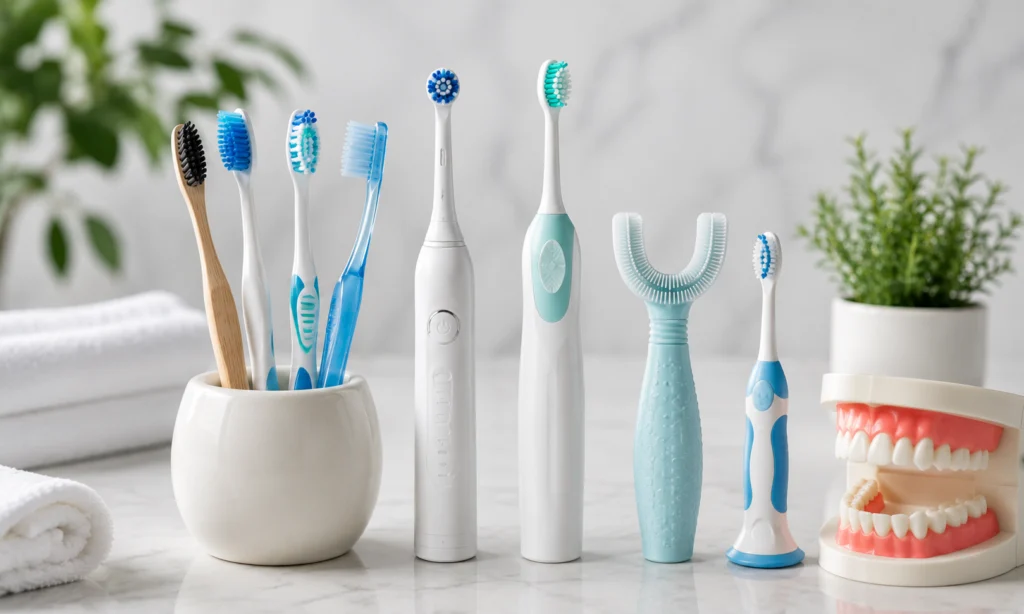
Toothbrushes help remove plaque, bacteria, and food particles to promote enamel protection, gum health, and long-term oral hygiene. Different toothbrushes serve different needs because brushing habits, oral anatomy, restorations, and sensitivity patterns vary. At Maison LA Dental, patients focused on smile appearance and preventive care often combine healthy home routines with professional teeth whitening because cleaner enamel surfaces may contribute to long-term cosmetic maintenance.
What it is: A manual or powered oral hygiene device designed to clean teeth, gums, and oral surfaces
Who it is for: Adults, children, orthodontic patients, implant patients, and individuals with sensitivity or restorative dental needs
Main benefits:
Limitations:
Timeline / durability: Most toothbrushes should be replaced every 3–4 months, or earlier if bristles become frayed.
Manual toothbrushes remain one of the most common oral hygiene tools because they are portable, accessible, and easy to replace.
Most dentists typically recommend:
Manual toothbrushes may help people who:
For example, people who prefer greater control over movement patterns often choose manual toothbrushes because brush angle and pressure remain fully user-directed.
People maintaining porcelain restorations are often advised to use gentler hygiene methods because excessive brushing pressure may affect margins around veneers.
Electric toothbrushes use powered movements that may improve plaque-removal regularity and create more uniform brushing patterns.
Electric toothbrushes often help people who:
Common electric toothbrush types include:
Features frequently include:
Pressure sensors → reduced brushing force → lower soft-tissue stress
For example, individuals who apply excessive pressure sometimes notice improved comfort after switching to sensor-guided systems.
According to the American Dental Association toothbrush guidance, both manual and powered toothbrushes may clean effectively when proper techniques are used.
Soft-bristle toothbrushes are commonly recommended because they remove plaque while reducing unnecessary surface friction.
Soft bristles may help reduce:
Ultra-soft options may help people with:
Condition → effect → solution:
Exposed roots → brushing discomfort → ultra-soft bristles
Patients with enamel wear or restoration margins often benefit from gentler brushing approaches because softer filaments may reduce unnecessary surface contact.
Interdental toothbrushes clean areas where standard brush heads may provide limited access.
Interdental brushes may help remove:
Interdental cleaning commonly supports:
People maintaining implant-supported restorations often require targeted hygiene methods because dental implants depend on healthy surrounding tissues.
For example:
Wider spacing → increased plaque retention → supplemental hygiene support
Bamboo toothbrushes replace traditional plastic handles with biodegradable materials.
Most bamboo toothbrushes include:
Environmental advantages may include:
However, toothbrush performance still depends on:
For example, rough bristle edges may still create tissue discomfort even if handle materials are environmentally friendly.
Specialty toothbrushes address situations where standard designs may not provide ideal access.
Examples include:
Orthodontic toothbrushes
Implant-care toothbrushes
Post-surgical toothbrushes
Children's toothbrushes
Smaller brush heads → easier access → improved brushing precision
Children often benefit from age-appropriate brush sizing because oversized brush heads may reduce cleaning accuracy.
Toothbrush head size influences how effectively brushing tools reach difficult areas.
Smaller brush heads may improve access around:
Larger brush heads may feel less precise in narrow spaces.
If crowded teeth reduce access, then compact brush-head designs may improve brushing effectiveness.
Brushing technique strongly influences hygiene outcomes regardless of toothbrush type.
Proper brushing commonly includes:
Excessive brushing force may contribute to:
According to the Centers for Disease Control oral hygiene recommendations, brushing twice daily and cleaning between teeth supports long-term oral health.
Toothbrush selection often depends on oral characteristics, dexterity, and hygiene goals.
| Feature | Manual Toothbrush | Electric Toothbrush |
| Cost | Lower | Higher |
| Brushing pattern | User-directed | More automated |
| Pressure control | User-controlled | Often sensor-assisted |
| Travel convenience | Easier | Less convenient |
| Dexterity support | Lower | Better support |
People with braces, restorations, or mobility limitations sometimes benefit from electric systems, while people with established routines may maintain effective hygiene using manual options.
Toothbrushes gradually lose effectiveness as bristles wear and deform.
Replacement commonly occurs:
Signs replacement may help include:
Rapid wear → excessive brushing force → habit adjustment
People interested in maintaining long-term smile aesthetics sometimes explore smile makeover options because oral health and cosmetic goals often work together.
Soft-bristle or ultra-soft toothbrushes are commonly recommended because they may reduce friction near exposed roots and sensitive enamel.
Electric toothbrushes may improve plaque-removal regularity for some individuals, especially those with braces or dexterity limitations.
Hard bristles may contribute to enamel wear and gum recession when combined with excessive brushing pressure.
Soft-bristle toothbrushes are often preferred because they may help protect porcelain surfaces and restoration margins.
Most toothbrushes should be replaced every 3–4 months or sooner if bristles become visibly worn.
Bamboo toothbrushes may work effectively if they use quality soft bristles and an appropriate brush-head design.
Toothbrush selection often depends on enamel condition, gum health, restorations, and brushing habits. Changes in comfort, visible recession, or brushing difficulty sometimes reflect technique patterns, brush design limitations, or evolving oral concerns.
If you are noticing persistent sensitivity, bleeding during brushing, or challenges cleaning around dental work, a dental evaluation may help identify contributing factors. If this applies to your situation, an assessment may help determine whether brushing patterns, restoration needs, or sensitivity trends are influencing daily comfort.
Maison LA Dental provides personalized care focused on preventive health, smile aesthetics, and individualized treatment planning. Patients interested in understanding how oral care habits affect long-term dental health may request a consultation to evaluate their condition and discuss personalized home-care recommendations.

| Monday | 9:00 AM – 5:00 PM |
| Tuesday | 9:00 AM – 5:00 PM |
| Wednesday | 10:00 AM – 7:00 PM |
| Thursday | 9:00 AM – 5:00 PM |
| Friday | 9:00 AM – 4:00 PM |
| Saturday | 9:00 AM – 2:00 PM |
| Sunday | Closed |