
Teeth do not change color all at once. The shift is quieter than that. Coffee settles into enamel over years, tea leaves a faint memory, tobacco can darken the surface, and age slowly thins enamel so the yellower dentin underneath becomes easier to see. Dentin is the inner layer of the tooth, and it naturally has a warmer tone than enamel. By the time many people start thinking seriously about whitening, the change can feel oddly emotional, as if the bathroom mirror has started telling a slightly different story.
That is why teeth whitening is not just a cosmetic question. It is also a practical one. People usually want to know how much brighter teeth can get, how long it takes, whether sensitivity is normal, and whether whitening works on every kind of stain. The honest answer is that whitening can be very effective, but it has limits, and the best experience usually starts with a dental exam rather than a product aisle.
For patients exploring what to expect teeth whitening to involve, Maison LA Boutique Dentistry provides professional whitening treatments tailored to individual smile goals. Patients across Los Angeles and nearby areas often visit our practice to better understand their options, expected results, and whether whitening is the right fit for their smile.
Most whitening systems use peroxide-based ingredients. These release oxygen that breaks apart stain molecules inside the tooth structure. In simple terms, whitening does not scrub the tooth like a polish. It changes the chemistry of certain stains so they reflect less color.
This matters because not all discoloration behaves the same way. Surface stains from coffee, tea, red wine, or smoking often respond better than deeper internal discoloration. Teeth may also look darker because of enamel wear, old fillings, trauma, certain medications taken during tooth development, or natural variation in dentin color. In those situations, whitening may help somewhat, or it may help very little.
A useful expectation is this: whitening brightens natural teeth, but it does not change every material in the mouth. Crowns, veneers, bonding, and tooth-colored fillings generally do not whiten the way natural enamel does. Crowns vs. veneers can help you understand when crowns, veneers, or alternatives make more sense than whitening alone.
Many people expect whitening to begin with gel or strips. Dentists often begin somewhere less glamorous: by looking at the gums, enamel, fillings, and the pattern of discoloration. That is not gatekeeping. It is how the process stays safe and predictable.
A dental evaluation may identify reasons to pause before whitening, such as cavities, cracked teeth, gum recession, exposed root surfaces, or active gum inflammation. Whitening agents can irritate already vulnerable areas. If a tooth has turned dark after an injury, the cause may be internal damage rather than ordinary staining, and that deserves diagnosis rather than guesswork.
Cleaning is sometimes the real first step. Plaque and tartar can hold stains and make teeth look dull. Removing that buildup may improve color on its own and gives whitening a cleaner surface to work with.
People often imagine a dramatic jump to paper-white teeth. Real results are usually more nuanced. The shade may lift gradually over days or weeks, and the final look often appears fresher and cleaner rather than artificially bright.
How much change happens depends on the starting shade, the cause of discoloration, the whitening method, and individual tooth structure. Yellow-toned teeth often respond better than gray-toned teeth. Uneven discoloration may improve unevenly at first. Dehydration right after treatment can also make teeth look temporarily whiter, with the final shade settling after a short period.
A reasonable expectation is improvement, not perfection. Natural-looking whitening results usually fit the face better than an extreme shade that draws attention for the wrong reason.
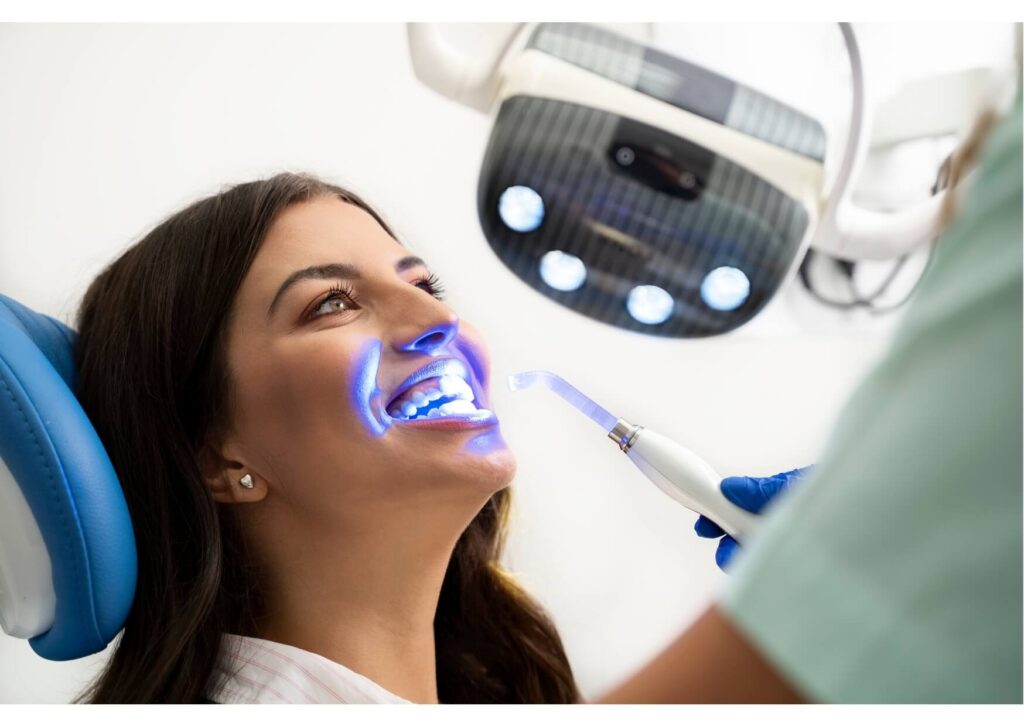
In-office whitening is faster and uses higher-strength materials under dental supervision. It can be a good choice for people who want noticeable change sooner or who prefer a monitored setting. Some offices use lights or heat, though the whitening chemistry itself is still driven mainly by the peroxide.
At-home whitening from a dentist typically uses custom trays and a professional-grade gel over a longer period. This approach can give excellent results and often allows more control over pace and sensitivity. Over-the-counter strips or tray systems may also help, especially for mild staining, but fit and strength vary.
Neither option is universally best. The better choice depends on tooth sensitivity, the type of discoloration, visible dental work, budget, and how quickly results are wanted.
The most common side effect is temporary sensitivity. Teeth may react more strongly to cold air, cold drinks, or sweet foods during whitening or shortly after. This happens because peroxide can move through enamel and temporarily irritate the inner part of the tooth, where the nerve is more reactive.
Mild gum irritation can also happen if whitening material contacts soft tissue. With professionally fitted trays or carefully applied in-office products, this risk is usually lower, but it is not zero.
What should raise concern is pain that feels intense, lingers, or seems focused in one tooth. Sharp pain in a single tooth may point to a crack, cavity, a leaking filling, an exposed root, or another issue that whitening did not cause but made easier to notice. That is a reason to stop and contact a dentist.
Some stains are stubborn for structural reasons. Tetracycline-related discoloration, fluorosis, trauma-related darkening, and color changes from aging deep within the tooth can be difficult to treat with standard whitening alone. Fluorosis is a developmental change in enamel that may create white, brown, or mottled areas. Trauma can cause a tooth to darken because of internal changes after an injury.
Whitening also does not repair translucency, chips, enamel loss, or shape differences. Sometimes the real issue is not shade but texture, contour, or contrast between teeth and restorations. In those cases, a dentist may discuss alternatives such as bonding, veneers, or replacing visible restorations after whitening if the color mismatch becomes obvious.
This is where expectations become more human than technical. Sometimes people ask for a brighter smile when what they really want is a smile that looks even, healthy, and less tired. Whitening can help, but it is not the answer to every aesthetic concern. A combined approach like a smile makeover can pair whitening with restorative work if needed.
In-office whitening may produce visible change in one visit, though some people need more than one session or a take-home phase afterward. At-home systems usually unfold over several days to a few weeks. The process can feel a bit like watching dawn through fog. One morning the teeth look almost the same, then suddenly the old shade is harder to find.
Results are not permanent. Teeth continue to interact with food, drinks, saliva, age, and daily habits. Coffee on a commute, tea through a long shift, red wine at dinner, smoking, and inconsistent oral hygiene can all shorten how long whitening appears to last.
Maintenance varies. Some people choose occasional touch-ups under dental guidance. Others are satisfied with a modest improvement and do not chase a brighter shade indefinitely. That restraint is often wise.
Whitening is not appropriate in every situation. People with untreated cavities, significant gum disease, severe enamel wear, exposed roots, or active tooth pain should be evaluated first. Pregnant or breastfeeding patients often choose to postpone elective whitening because safety data for purely cosmetic use is limited.
Teens and younger patients may need extra caution because their teeth can be more reactive. Anyone with extensive visible crowns, veneers, or bonding should ask how whitening could affect color harmony across the smile.
If there is facial swelling, fever, pus, a bad taste coming from one area, or severe throbbing pain, that is not a whitening question anymore. Those are urgent dental red flags and need prompt evaluation.
| Option | What It Usually Offers | Main Tradeoffs |
| In-Office Whitening | Faster visible change, supervised application, useful for people wanting quicker results | Higher cost, temporary sensitivity can still occur |
| Dentist-Supervised Take-Home Trays | Custom fit, gradual brightening, more control over comfort | Takes longer, requires consistent use |
| Over-The-Counter Strips Or Trays | Lower cost, convenient access, may help mild staining | Less customized fit, variable strength, may be less predictable |
| Whitening Toothpaste | Helps remove some surface stain, easy to add to routine | Limited effect on deeper discoloration |
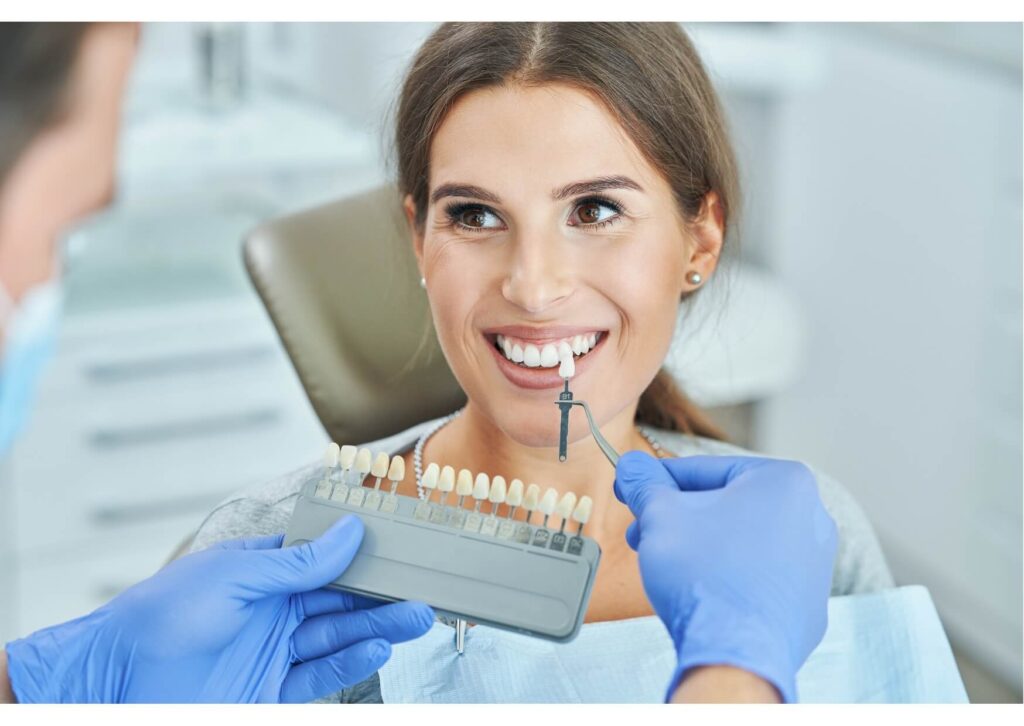
Whitening is sold as a before-and-after story, but most smiles do not live in neat panels. Teeth hold history. A chipped edge from years ago, a filling that stayed loyal while the enamel changed around it, a canine that was always a little darker than the incisors. The mouth is not a showroom. It is a record.
So what should you expect from teeth whitening? Expect some science, some limits, and occasionally a surprise. Expect that healthy teeth usually whiten better than neglected teeth. Expect that sensitivity may happen, that restorations may not match, and that the best result is often the one that still looks like a real person in daylight.
If the color change is bothering you, a dentist can help sort out whether whitening is likely to work well, whether another cosmetic option would make more sense, or whether the discoloration is trying to tell a different clinical story. Sometimes the mirror is only reflecting stains. Sometimes it is asking for a closer look.
If you are tired of stains, uneven discoloration, or whitening products that deliver inconsistent results, it may be time for a more professional approach.
Maison LA Boutique Dentistry provides customized teeth whitening treatments in Los Angeles, CA designed around your smile, sensitivity level, and cosmetic goals. Call (323) 660-5522 today to schedule a consultation and find out what level of whitening is realistically possible for your teeth.
It varies. Results may last months to a few years depending on the whitening method, diet, smoking status, oral hygiene, and natural enamel characteristics.
Mild temporary sensitivity is common. If pain is severe, lasts, or seems isolated to one tooth, contact a dentist.
Not always. A single dark tooth may have internal discoloration from trauma, a dying nerve, or an old restoration. That pattern should be evaluated before whitening.
Often yes. A cleaning can remove plaque and tartar, improve the starting shade, and help whitening work more evenly.
Related Articles

| Monday | 9:00 AM – 5:00 PM |
| Tuesday | 9:00 AM – 5:00 PM |
| Wednesday | 10:00 AM – 7:00 PM |
| Thursday | 9:00 AM – 5:00 PM |
| Friday | 9:00 AM – 4:00 PM |
| Saturday | 9:00 AM – 2:00 PM |
| Sunday | Closed |