
Affordable dental implants in Los Angeles, CA, are possible, but the best value usually is not the lowest advertised price. A meaningful comparison should include the implant, abutment, crown, imaging, any needed grafting, clinician qualifications, and follow-up care, while also confirming that implants are a safe fit for your oral and overall health.
If you're deciding between replacement options for missing teeth and want a clear sense of total cost, dental implants often offer long-term stability and improved function compared with removable solutions. Maison LA Boutique Dentistry in Los Angeles, CA helps patients understand treatment steps, likely costs, and expected recovery so decisions are clearer.
A dental implant is a small post, usually made of titanium, placed in the jaw to replace a missing tooth root. As the area heals, the bone bonds to the implant through a process called osseointegration, creating support for an abutment and a custom crown.
Implants can replace one tooth, several teeth, or a full arch of teeth. Unlike a traditional bridge, a single implant usually does not require reshaping healthy neighboring teeth, and unlike a removable denture, it is supported by the jaw.
A complete estimate should list each expected cost, not just the surgical post. Ask whether the quote includes the exam, 3D imaging if needed, tooth extractions, bone grafting, sedation, a temporary tooth, the abutment, the final crown or bridge, and follow-up visits.
Affordable care should mean predictable value and safe treatment, not just the smallest starting number. Written estimates and clear financing terms make it easier to compare options fairly.
The right tooth-replacement option depends on how many teeth are missing, how much bone is available, your oral health, your cosmetic goals, and your budget. A qualified dentist or specialist should explain why a specific option fits your clinical needs.
|
Option |
Main Benefit |
Important Limit |
Typical Longevity Considerations |
|---|---|---|---|
|
Single implant and crown |
Replaces one tooth without using adjacent teeth for support |
Requires surgery, healing time, and adequate bone |
The implant may last many years with good care, while the crown may need replacement sooner |
|
Implant-supported bridge |
Replaces several teeth with fewer implants than one implant per tooth |
Cleaning under the bridge takes instruction and consistency |
Parts may wear or need repair over time |
|
Full-arch fixed implant teeth |
Provides stable replacement for most or all teeth in an arch |
Higher cost and more complex planning |
Daily cleaning and ongoing professional maintenance are still essential |
|
Improves denture stability and may cost less than a fixed arch |
Must be removed for cleaning and may still have slight movement |
Attachments and denture teeth often need maintenance |
|
|
Conventional bridge |
Usually faster and avoids implant surgery |
Neighboring teeth must support the bridge |
Decay, fracture, or gum problems can affect the supporting teeth |
|
Removable partial or full denture |
Often has the lowest initial cost |
Less stable and does not function like natural teeth |
Fit can change as the gums and jaw change |
Implants should not be presented as lifetime guarantees. Smoking, uncontrolled diabetes, gum disease, teeth grinding, poor home care, and missed maintenance visits can increase the risk of failure, inflammation, bone loss, or mechanical problems.
If you're concerned about long-term issues, see can dental implants be removed.
Dental implant cost varies because treatment is customized. The number and location of missing teeth, surgical complexity, implant system, restoration material, lab work, and need for added procedures all affect the final price.
Bone grafting may be recommended if the jaw does not have enough width or height to support an implant. In the upper back jaw, some patients also need a sinus lift, which can add cost and extend treatment time.
Insurance may help with parts of treatment such as the exam, tooth extractions, grafting, or the crown, even when implant coverage is limited. Patients can also ask about phased treatment, third-party financing, in-office payment plans, HSAs, FSAs, and whether financing changes the total amount paid.
Be cautious with prices that leave out necessary parts of care or apply only to ideal cases that have not been confirmed by an exam. It is also smart to ask what happens financially if grafting becomes necessary, an implant does not integrate, or the temporary or final restoration needs adjustment.
Safe implant treatment starts with careful diagnosis and planning. The evaluation may include a gum exam, bite analysis, review of medical conditions and medications, and a cone beam CT scan when clinically appropriate to assess bone and nearby structures.
Ask who will place the implant, who will restore it, and how those clinicians coordinate care. Training, experience with the proposed procedure, sterilization standards, emergency protocols, and a clear maintenance plan matter more than promotional language.
A useful written plan should state the implant system, number of implants, type of temporary tooth, final restoration material, expected stages, and alternatives. Do not rely on a starting price until the office gives you an itemized estimate based on your exam.
Implant placement is usually done with local anesthetic. Most patients feel pressure or vibration during the procedure, but they should not feel sharp pain.
Sedation may be available for anxiety or longer appointments. If sedation is being considered, ask about candidacy, transportation needs, risks, and added fees.
After surgery, soreness, swelling, bruising, and minor bleeding are common for the first few days. Your dental team should give personalized instructions for eating, cleaning, activity, and pain control based on your procedure and health history.
Healing often takes several months while the implant bonds with the bone. Some patients can receive a temporary tooth sooner, but immediate placement or immediate loading is not right for every case and does not remove the need for biologic healing.
Call the treating office promptly if pain or swelling is severe, worsening, or not improving, or if you notice fever, pus, uncontrolled bleeding, a loose implant, a loose temporary tooth, or new numbness. Trouble breathing or swallowing, rapidly spreading facial swelling, or heavy bleeding that will not stop requires urgent or emergency care.
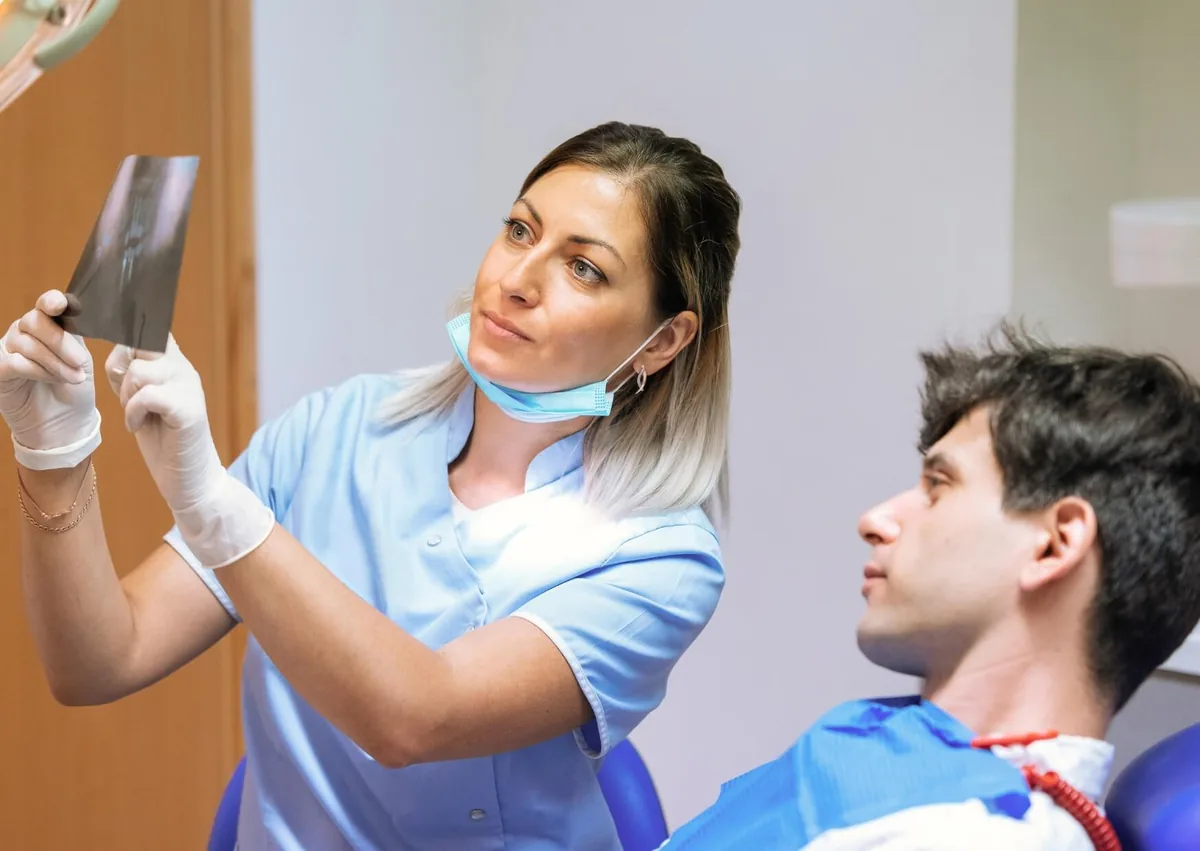
Many adults with missing or non-restorable teeth may qualify for implants if they have enough bone, manageable health conditions, and the ability to maintain good oral hygiene. Age alone usually matters less than growth status, healing ability, gum health, and overall medical risk.
Active gum disease and untreated decay usually need to be addressed first. Smoking or vaping nicotine, poorly controlled diabetes, certain medications, prior radiation to the jaws, immune conditions, and severe grinding do not always rule out implants, but they can increase risk or change the treatment plan.
A consultation makes sense soon after tooth loss, after learning a tooth may not be repairable, or when a denture feels loose or frustrating. Early evaluation can help preserve options because bone often shrinks after tooth loss, though treatment may still be possible later with additional planning.
Bring an updated medication list, relevant medical history, insurance details, and any previous dental images. A personalized exam is the right next step for comparing total costs, understanding alternatives, and deciding whether implants offer good long-term value for your situation.
To get a personalized estimate and confirm whether implants are the best choice for your mouth, a clinical exam and itemized plan is the appropriate next step. Call Maison LA Boutique Dentistry for dental implants in Los Angeles, CA, serving Silver Lake and East Hollywood, at (323) 660-5522 to schedule an appointment.
There is no single reliable price because treatment may involve one implant and crown, several implants, grafting, extractions, sedation, or a full-arch restoration. An exam and itemized estimate are necessary to compare complete treatment costs.
Some ads list only the implant post or a starting price for simple cases. The abutment, crown, imaging, grafting, temporary teeth, follow-up care, or anesthesia may be separate.
Coverage varies by plan. Some policies may help pay for related procedures or the final restoration, while others exclude implants or apply waiting periods, annual maximums, or missing-tooth clauses.
Sometimes, yes. Infection, bone condition, implant stability, gum shape, bite forces, and overall health all affect whether immediate placement is appropriate.
A lower price does not automatically mean unsafe care, and a higher price does not guarantee a better result. Safety depends on proper diagnosis, clinician qualifications, suitable materials, informed consent, infection control, careful surgery, restorative planning, and long-term maintenance.

| Monday | 9:00 AM – 5:00 PM |
| Tuesday | 9:00 AM – 5:00 PM |
| Wednesday | 10:00 AM – 7:00 PM |
| Thursday | 9:00 AM – 5:00 PM |
| Friday | 9:00 AM – 4:00 PM |
| Saturday | 9:00 AM – 2:00 PM |
| Sunday | Closed |