
A tooth implant usually takes three to nine months from evaluation to the final crown, although some straightforward cases move faster and more complex cases can take a year or longer. Most of that timeline is healing time for the bone and gums, not time spent in the dental chair.
If you want to replace a missing tooth with something that looks natural and feels secure, dental implants can be a long-lasting option that also helps protect the jawbone. Maison LA Boutique Dentistry in Los Angeles, CA helps patients understand each step clearly so the timeline feels predictable, not overwhelming.
A dental implant is a small post, usually made of titanium, that replaces a missing tooth root. Once it becomes stable in the jaw, it supports an abutment and a custom crown that looks and functions like a natural tooth.
The process usually starts with an exam, imaging, and treatment planning. Your dentist checks bone volume, gum health, bite, nearby teeth, and any medical factors that could affect healing.
If the site is ready, placing one implant often takes about one to two hours. After that, the implant generally needs two to six months to fuse with the bone, a process called osseointegration.
Once healing is complete, the abutment is attached and a digital scan or impression is taken for the final crown. Crown design, gum shaping, and lab fabrication can add a few more weeks.
If a damaged tooth still needs to be removed, that can change the schedule. In some cases, extraction and implant placement can happen at the same visit, but infection, thin bone, or poor initial stability may make it safer to wait. Learn more about tooth extractions to understand how socket healing can affect timing.
Bone grafting can also extend the process. If the area is too narrow or shallow to support an implant, a graft may be needed before or during placement.
A small graft may heal alongside the implant, while a larger graft may need four to six months or more before implant surgery. Read about bone grafting to see how graft type and healing can affect the overall timeline.
Upper back teeth sometimes need a sinus lift if there is not enough bone below the sinus. That can add several more months, especially if the graft must heal before the implant is placed.
Healing time also varies based on smoking or nicotine use, gum disease, implant location, and overall health. Diabetes does not automatically rule out treatment, but poor blood sugar control can raise the risk of slower healing and infection.
“Same-day implant” can mean placing the implant right after an extraction, attaching a temporary tooth on the day of surgery, or both. It does not mean the implant has fully healed in one day.
A same-day temporary tooth can help you avoid a visible gap and maintain your smile during healing. However, it often has to stay out of heavy biting pressure until the implant fully bonds with the bone.
A traditional staged approach takes longer but may be more predictable when bone is limited, infection is present, or the implant cannot get enough initial stability. The right choice depends on your anatomy and healing risk, not speed alone.
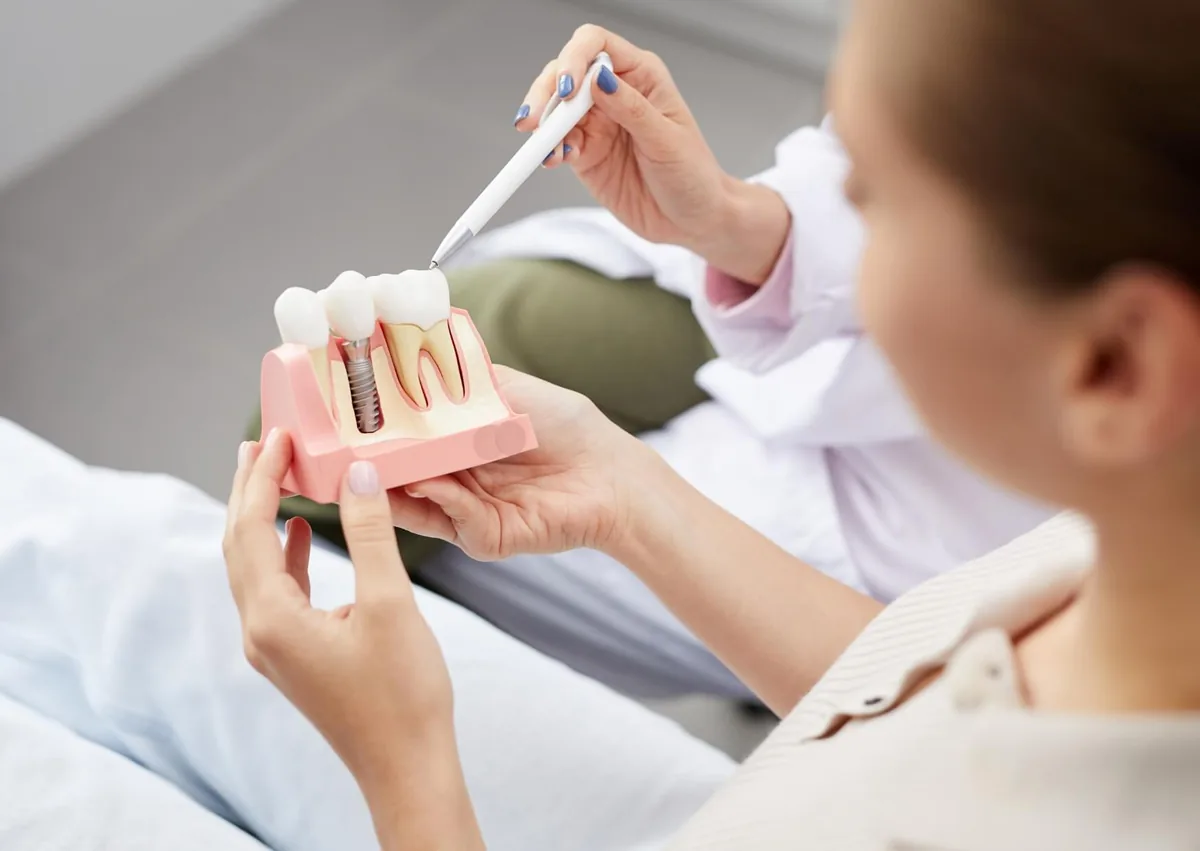
Implants do not rely on neighboring teeth for support. They can restore appearance and chewing function while also helping preserve bone at the missing-tooth site.
A fixed bridge may be completed faster, but it uses adjacent teeth and does not replace the missing root. If cost is part of your decision, see cost of dental implants.
A removable partial denture is usually less invasive and faster to make. It is also removable, may shift during eating, and does not help preserve bone the way an implant can.
Implants can last many years and often decades, but no restoration lasts forever. The implant itself may outlast the crown, which can wear, chip, or need replacement sooner.
Long-term success depends on daily oral hygiene, professional maintenance, bite forces, tobacco exposure, and general health. If you grind your teeth at night, your dentist may recommend protection to reduce stress on the implant and crown.
Implant placement is usually done with local anesthetic, so you may notice pressure or vibration but should not feel sharp pain. Sedation options may also be available for anxiety or longer procedures, depending on what is appropriate for your case.
After surgery, mild swelling, bruising, tenderness, and a little bleeding are common for the first few days. Many people return to normal daily activities within a day or two, although grafting or multiple implants can mean a longer recovery.
Follow your dentist’s instructions for eating, cleaning the area, activity, and pain control. Call the office if pain or swelling gets worse, bleeding continues, pus appears, the implant or temporary tooth feels loose, or numbness does not improve as expected.
Trouble breathing or swallowing needs urgent medical care. Those symptoms are not typical and should not wait.
A good candidate usually has enough healthy bone, manageable medical risks, healthy or treatable gums, and the ability to keep the area clean. Age alone is rarely the deciding factor for adults, although younger patients may need to wait until jaw growth is complete.
Active gum disease, untreated decay, heavy nicotine use, uncontrolled health conditions, or certain medications can affect the plan. These issues do not always prevent implants, but they do require a careful, individualized assessment.
It makes sense to schedule a consultation when a tooth is already missing, cannot be predictably saved, or may need extraction. An exam and three-dimensional imaging, when needed, can show whether immediate placement is realistic and give you a more accurate timeline.
To get a personalized timeline, discuss any grafting or extraction needs, and learn whether dental implants are right for you, schedule a consultation to review imaging and treatment options. Contact Maison LA Boutique Dentistry about dental implants in Los Angeles, CA and nearby Silver Lake or Los Feliz at (323) 660-5522 to book an appointment.
The implant and a temporary tooth can sometimes be placed in one visit. The healing process still takes months, and the final crown is usually placed after the implant has integrated with the bone.
An implant may be placed the same day as the extraction, after several weeks of soft-tissue healing, or after several months of bone healing. The timing depends on infection, bone condition, appearance goals, and how stable the implant can be at placement.
Many patients can wear a temporary removable tooth, temporary bridge, or carefully designed temporary crown during healing. The best option depends on the location of the tooth and whether pressure on the area could interfere with integration.
If an implant stays mobile or does not bond with the bone, it may need to be removed and the site allowed to heal. Depending on the cause and the remaining bone, another implant may still be possible later. For more on removal and next steps, see Can dental implants be removed.
A straightforward case usually involves several visits for evaluation, surgery, healing checks, scans or impressions, and crown placement. Bone grafting, temporary restorations, or adjustments can add more appointments.

| Monday | 9:00 AM – 5:00 PM |
| Tuesday | 9:00 AM – 5:00 PM |
| Wednesday | 10:00 AM – 7:00 PM |
| Thursday | 9:00 AM – 5:00 PM |
| Friday | 9:00 AM – 4:00 PM |
| Saturday | 9:00 AM – 2:00 PM |
| Sunday | Closed |