
To remove plaque from teeth, brush twice a day with fluoride toothpaste and clean between every tooth once a day with floss or another interdental cleaner. Soft plaque can be removed at home, but hardened plaque called tartar requires professional cleaning.
The key is consistency, not aggressive scrubbing. If plaque keeps building up in the same spots, a dentist or hygienist can show you where your technique needs adjustment and check for gum disease or decay.
If the thought of professional tartar removal makes you anxious, anxiety-free dentistry helps you stay calm during cleanings and evaluations. Maison LA Boutique Dentistry in Los Angeles, CA creates a gentle, reassuring visit so you can complete necessary care comfortably.
Plaque is a soft, sticky film made of bacteria, saliva, and food debris. It tends to collect along the gumline, between teeth, around dental work, and in crowded areas that are harder to clean.
You may notice a fuzzy feeling on the teeth or bad breath, but plaque is often hard to see. If it stays in place, bacterial acids can raise the risk of cavities, and the gums can become red, tender, or prone to bleeding.
Over time, minerals in saliva can harden plaque into tartar, also called calculus. Tartar often looks yellow, tan, or darker and commonly forms behind the lower front teeth or along the gumline.
Brush for two minutes twice a day with a soft-bristled manual or powered toothbrush and fluoride toothpaste. Angle the bristles toward the gumline and use gentle, short strokes on the outer, inner, and chewing surfaces.
Clean between the teeth once a day with floss, interdental brushes, or another device recommended by a dental professional. Curve the floss around each tooth and slide it gently under the gumline instead of snapping it into the gums.
An electric toothbrush can make thorough brushing easier, especially if you have limited hand mobility or tend to brush too hard. See types of toothbrushes if you want help choosing the right tool.
A plaque-disclosing product can help you spot areas you are missing. It stains plaque temporarily, which makes it easier to improve your technique, but it does not diagnose cavities or gum disease.
Different tools help with different parts of plaque control. The best routine is the one you can do thoroughly and consistently every day.
|
Option |
Best Use |
Main Limit |
|---|---|---|
|
Manual toothbrush |
Removing plaque from exposed tooth surfaces |
Technique and timing matter |
|
Powered toothbrush |
Supporting consistent motion and pressure |
Still requires correct positioning |
|
Floss |
Cleaning tight contacts between teeth |
May be difficult around some dental work |
|
Interdental brush |
Cleaning larger spaces, braces, or some bridges |
The correct size is important |
|
Water flosser |
Cleaning around braces or for people who struggle with string floss |
May not remove firmly attached plaque from every surface |
|
Professional cleaning |
Removing tartar and deposits above or below the gumline |
Does not replace daily home care |
Mouthwash may support your routine, depending on the ingredients, but it does not replace brushing or cleaning between the teeth. Ask a dental professional which type makes sense if you have dry mouth, sensitive tissues, frequent cavities, or gum disease.
Do not scrape your teeth with fingernails, metal tools, or home dental instruments. These methods can injure the gums, scratch tooth surfaces, and damage fillings or crowns without safely removing buildup below the gumline.
Once plaque hardens into tartar, it bonds firmly to the tooth and creates a rough surface that attracts more plaque. Brushing can help prevent new buildup, but it cannot reliably remove tartar that is already there.
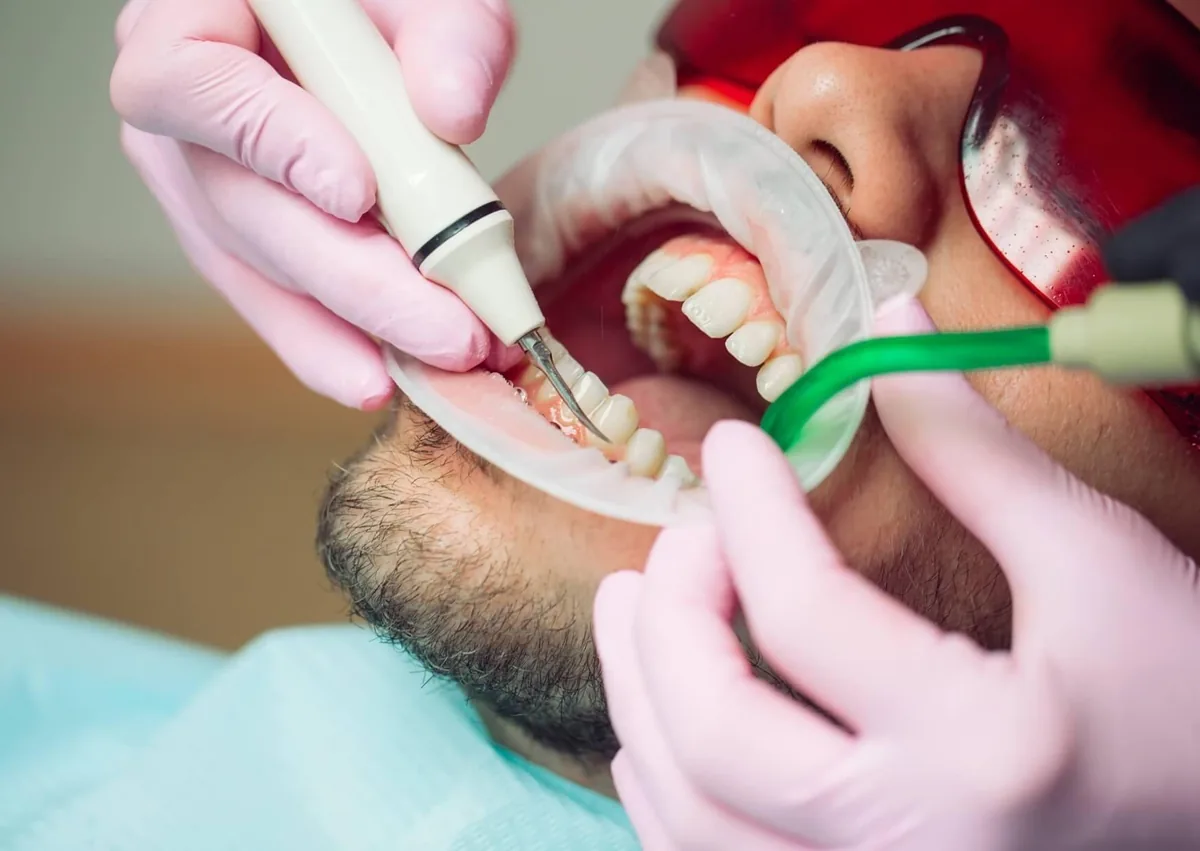
During a professional cleaning, a dental hygienist or dentist uses specialized hand or ultrasonic instruments to remove deposits. If fear of dental visits is a barrier, ask about anxiety-free dentistry.
For patients who need extra support during cleanings, sedation dentistry and options such as nitrous oxide sedation may help. If buildup extends below the gums or gum disease is present, a deeper cleaning such as scaling and root planing may be recommended after an exam.
Professional results last longest when home care is strong, but plaque starts forming again quickly. How often you need cleanings depends on your gum health, cavity risk, tartar buildup, tobacco use, medical history, and how well you can clean at home.
At home, plaque removal should feel gentle, not forceful. Mild bleeding can happen when inflamed gums start getting cleaned more regularly, but ongoing or heavy bleeding should not be ignored.
A routine professional cleaning may involve pressure, vibration, water spray, and a scraping sensation. If your teeth are sensitive or your gums are inflamed, you may feel temporary tenderness, so it is important to tell the clinician if you are uncomfortable.
After tartar is removed, teeth often feel very smooth. Spaces between teeth may seem more noticeable because buildup is no longer filling them, and temporary sensitivity can happen if roots are exposed or heavy deposits were present.
Anyone can benefit from better plaque control, but some people need extra help. A professional evaluation is especially useful if you have braces, implants, bridges, crowded teeth, dry mouth, dexterity limits, frequent cavities, or a history of gum disease.
You should also schedule an exam if you can see or feel hard deposits, have ongoing bad breath, or notice gums that bleed, swell, recede, or stay tender. Loose teeth, changes in your bite, pus near the gums, or pain when chewing can point to a more advanced problem.
Seek urgent dental or medical care for rapidly increasing facial or jaw swelling, fever with dental swelling, trouble swallowing, or difficulty breathing. Those symptoms may be related to a spreading infection and are not something to manage with home plaque-removal methods.
Most people can discuss brushing technique and interdental tools during a routine dental visit. If plaque keeps returning in the same areas or you suspect tartar, it makes sense to schedule a consultation sooner rather than waiting for the problem to worsen.
If dental anxiety is keeping you from needed cleanings, a calm-first approach lets clinicians remove tartar safely and with less stress. Maison LA Boutique Dentistry offers anxiety-free dentistry in Los Angeles, near Silver Lake and East Hollywood; call (323) 660-5522 or book online to arrange care.
Soft plaque can often be removed with one careful brushing and interdental-cleaning session. Hardened tartar will stay in place until a dental professional removes it.
Some fluoride toothpastes contain properly formulated baking soda and can help clean teeth. Using household powders or abrasive mixtures directly on the teeth may irritate tissues or wear surfaces, so a fluoride toothpaste with the American Dental Association Seal of Acceptance is the safer choice.
Bleeding often happens when plaque has inflamed the gums, which is called gingivitis, or when cleaning is too forceful. Keep cleaning gently, but schedule an evaluation if bleeding is frequent, heavy, painful, or does not improve.
A water flosser can help disrupt plaque and reduce gum inflammation, especially around braces or dental work. Depending on your tooth spacing and needs, a dentist or hygienist may recommend it alone or along with floss or interdental brushes.
Plaque is usually soft and may feel fuzzy, while tartar is hard and does not brush away. Because staining and rough areas can have other causes, a dental exam is the most reliable way to tell the difference.

| Monday | 9:00 AM – 5:00 PM |
| Tuesday | 9:00 AM – 5:00 PM |
| Wednesday | 10:00 AM – 7:00 PM |
| Thursday | 9:00 AM – 5:00 PM |
| Friday | 9:00 AM – 4:00 PM |
| Saturday | 9:00 AM – 2:00 PM |
| Sunday | Closed |